Are PayPal invoice costs worth it for your business?
Evaluate payment-processing costs, currency conversion and customer convenience using the payment route you actually expect to use.
By the Novaveliq team

The useful bit
Judge the total cost against the value of the payment experience. An advertised processing rate is only one part of that calculation.
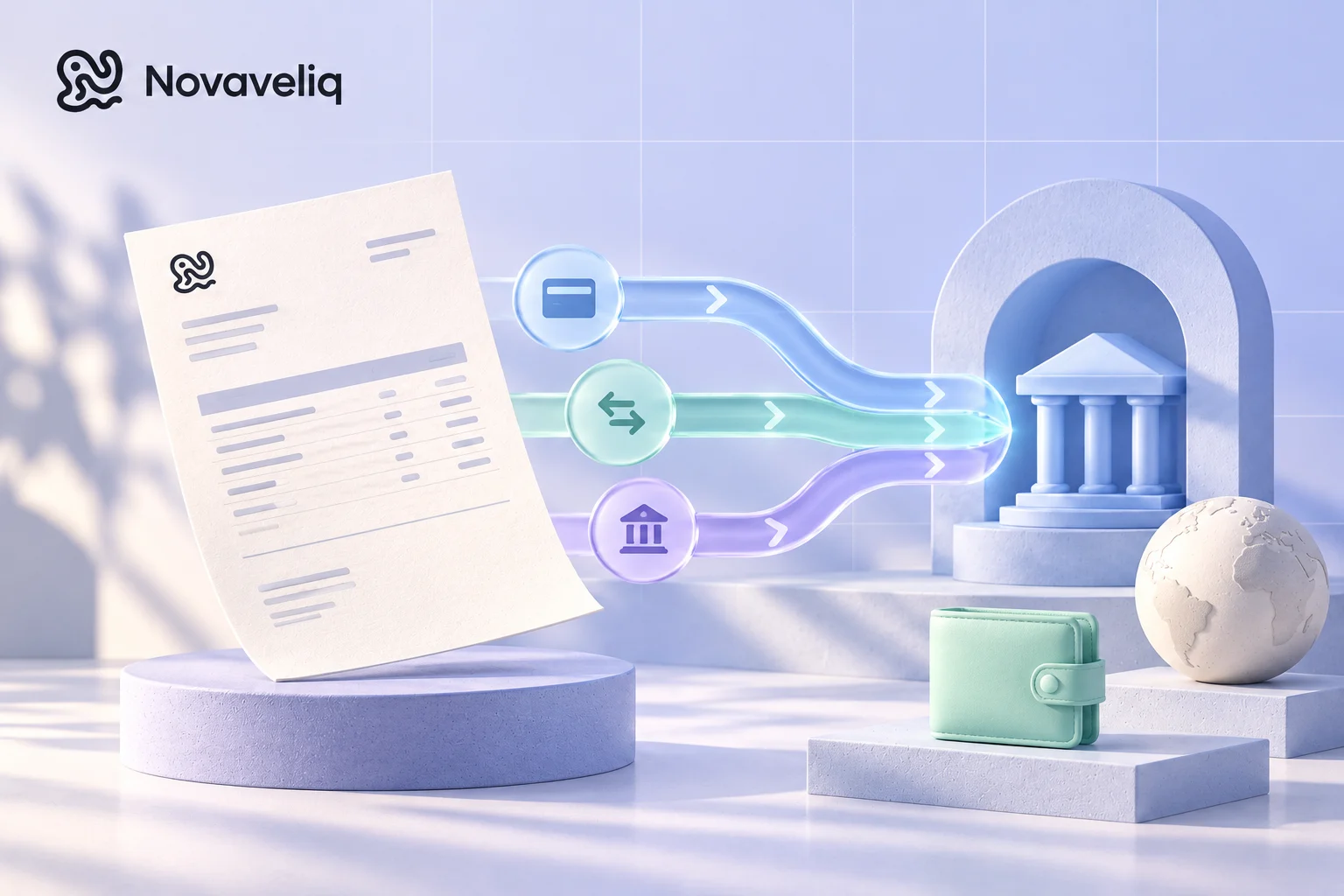
Separate the invoice from the payment transaction
An invoice and the payment used to settle it are different parts of the process. When reviewing PayPal invoicing, check which charges apply to creating or managing the invoice and which apply when a customer pays through a particular route. Read the current terms for your business account rather than relying on a fee quoted for another market.
The cost can depend on your account's country, the customer's location, the selected payment method, the currencies involved and other transaction details. This article does not quote a current PayPal tariff. Use PayPal's official merchant-fee information and the details available in your account for the transaction you are evaluating.
Calculate the total on a typical invoice
Start with a realistic invoice amount. Identify the applicable processing charge, then add any relevant currency conversion or cross-border costs and the cost of getting the funds to the account where you need them. Include a subscription or other account charge where it applies to the route you are comparing.
For a purely illustrative example, a £12 total payment cost on a £600 invoice is 2% of its value. Those figures are not a PayPal rate quote. The useful calculation is total payment cost divided by the invoice amount, using the actual current charges for your account and payment route.
- Use the correct account market and payment method.
- Include applicable percentage and fixed transaction charges.
- Check whether currency conversion is involved and at which stage.
- Check withdrawal, refund and dispute terms rather than assuming they are cost-free.
- Compare the net receipt and the records you will need to reconcile it.
Put customer convenience into the comparison
A payment method may be useful because customers recognise it, can complete payment easily or can follow a process their business already approves. Those benefits can matter even when a different route has a lower direct transaction charge. They should still be assessed against your own customers rather than treated as a universal advantage.
Check whether the customer can use the offered method in their location and whether the payment experience is appropriate to the invoice size. Consider your own support process too: where will you look for a failed payment, a customer query or an unexpected balance? Convenience should apply to both sides of the transaction.
Compare routes that solve the same problem
Compare a card or wallet payment with other available ways for the same customer to pay, not an unrelated headline transfer rate. A domestic bank transfer, another connected processor or an agreed recurring method may be relevant depending on the transaction. Check each route's full costs, eligibility and timing.
Avoid adding an unexpected payment surcharge after the customer has accepted your quote. Any fee allocation needs to comply with the agreement, applicable law and the provider's rules. You can instead consider expected collection costs when setting future project prices and deciding which payment methods to offer.
Reconcile gross payments and net receipts
A customer can pay the full invoice while your later receipt is smaller after processing costs. Record the fee appropriately rather than treating every difference as an unpaid customer balance. A grouped payout, refund or conversion can require more than a one-to-one match between an invoice total and a bank-feed line.
Retain the invoice, transaction detail and settlement information needed to explain the difference. If you are unsure how fees, currency differences or refunds should be recorded for your business, ask your accountant rather than changing the issued invoice to force a match.
Make the decision around the whole workflow
PayPal may be a useful option when its current payment experience fits your customers and its full costs fit your margins. A different route may suit other clients or invoice types. Review the decision when your currencies, customer mix or transaction sizes change.
Novaveliq helps organise your invoice records and supported payment instructions. It does not waive another provider's fees or make an unconnected payment method available. Give each invoice a genuine, usable payment route and keep the costs of that route visible in your business planning.
Further reading
 Novaveliq
Less paperwork. More room to build.
Keep your invoices, contacts and payment instructions organised in Novaveliq.
Create your workspace